Deep Foundations: When and How Piling Works Protect Your Investment
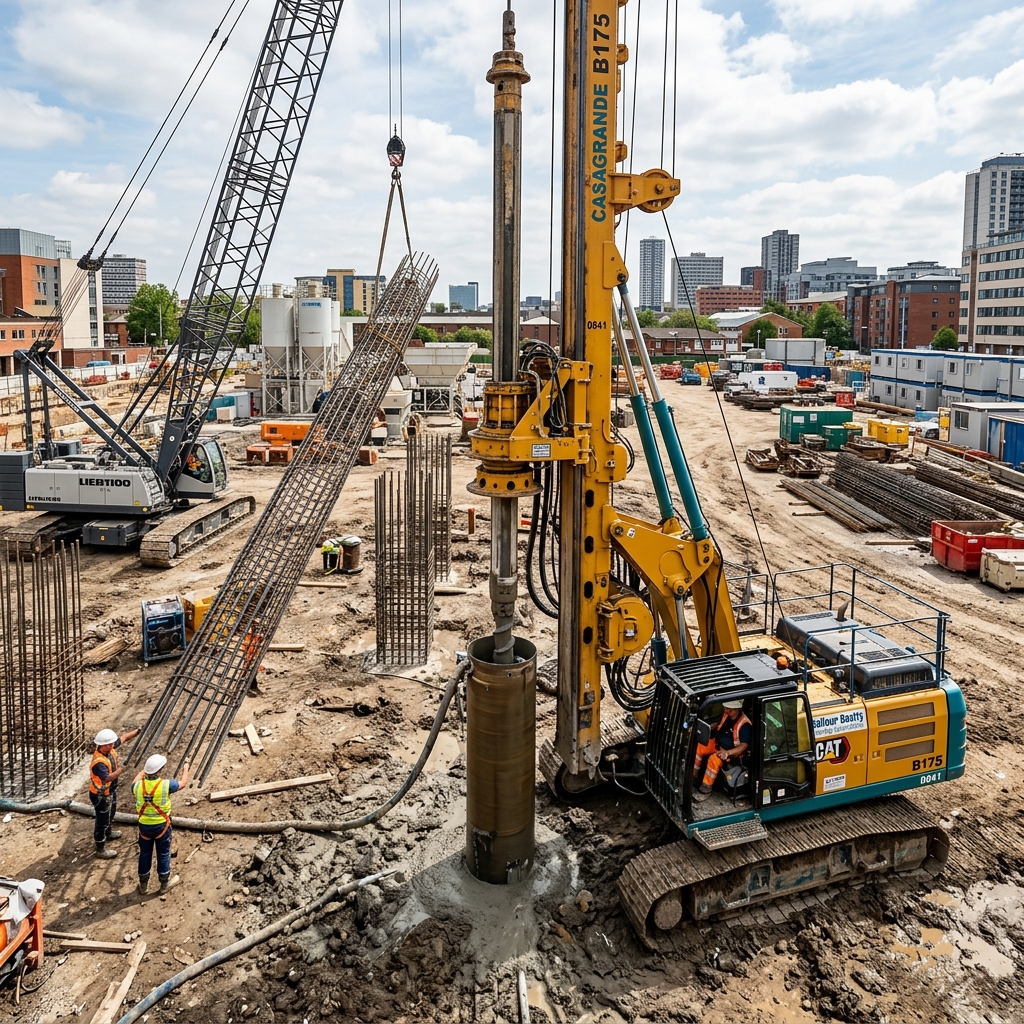
In structural engineering, the foundation is the interface that transfers the weight of the building safely into the Earth. Most small buildings sit on shallow footings. However, when the surface soil is loose silt, soft clay, or reclaimed organic fill, it cannot support heavy loads. In such scenarios, engineers must use deep foundations, and the most common method of deep foundation is **piling works**. Piling secures your building by bypassing the weak surface layers and anchoring directly into stiff, stable soils or solid bedrock deep below.
When is Piling Required?
Piling is not standard for every home, but it becomes essential under specific conditions. In cities like Agartala, where high-rise construction is growing and many sites sit on loose alluvial clay near river basins, piling works are extremely common.
A structural engineer will recommend piling when:
- Low SBC Soil: The soil test report indicates the surface soil has very low bearing capacity.
- High Water Table: The ground water table is high, causing shallow soils to lose cohesive strength.
- Heavy structural loads: Multi-story commercial complexes or apartment buildings.
- Adjacent Excavation Risks: Designing near existing structures where shallow footings could slide or settle.
- Expansive Soils: Soil layers that undergo massive volume changes with moisture shifts.
Types of Concrete Piles Used in Regional Construction
Different soil profiles and loading requirements call for different piling methods. Here are the most prominent methods used locally:
1. Bored Cast-in-Situ Concrete Piles
This is the most common piling method for medium-to-large buildings in Agartala. A piling rig drills a deep vertical hole into the ground. A steel reinforcement cage is lowered into the hole, and high-strength concrete is poured using a tremi pipe. This method creates extremely strong, deep columns that can reach depths of 15 to 30 meters or more.
2. Under-Reamed Piles
For structures built on black cotton soil or expansive clay, under-reamed piles are used. These are bored cast-in-situ concrete piles with one or more bulb-shaped expansions (bulbs) at the bottom. The bulbs anchor the pile deep into the stable soil, preventing the building from lifting or settling during dry and rainy seasons.
How Piles Transfer Load
Piles transfer the weight of the building using two primary mechanical forces:
- End Bearing: The bottom of the pile rests on a hard layer of rock or compact sand, behaving like a vertical pillar supporting the structure from below.
- Skin Friction: The friction between the soil and the outer surface of the pile shares the load, distributing the weight along the length of the pile.
The Execution Checklist: Why Quality Control is Crucial
Piling works are buried underground, meaning once they are poured, you cannot easily inspect them. Therefore, strict on-site execution supervision is mandatory. Core drilling must reach the design depth, boreholes must be flushed clean of bentonite slurry, steel cages must be correctly centered, and concrete pouring must be continuous to avoid internal cold joints.
Working with an experienced, certified construction team that owns specialized piling machinery ensures your deep foundation is built exactly to structural specifications, guaranteeing the safety of your building for decades to come.