Geotechnical Foundation: Why Soil Testing is the First Step to Building Safety
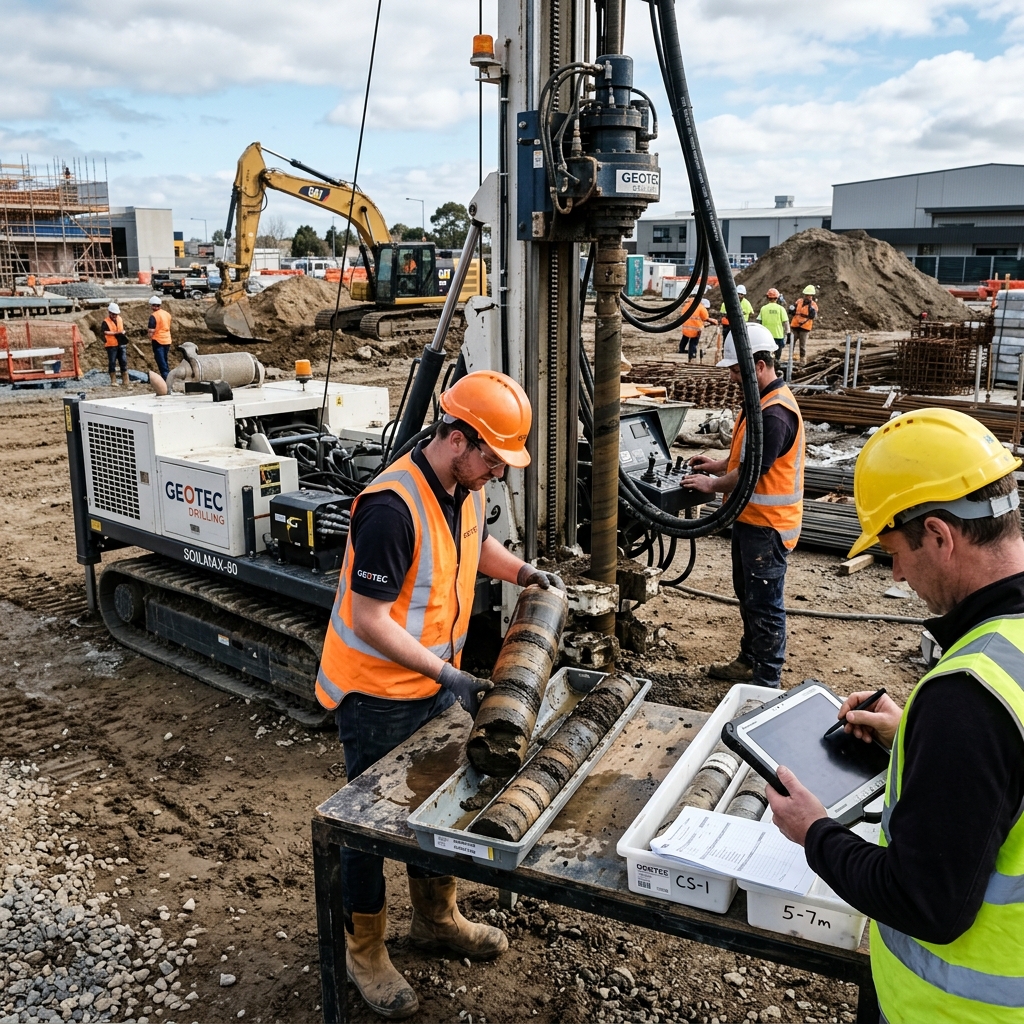
Every iconic building starts not with steel beams or concrete columns, but with the dirt underneath. Soil testing—also known as geotechnical investigation—is the single most critical step in the pre-construction phase of any project. It determines the bearing capacity of the soil, its physical properties, and its chemical composition. Skipping or rushing this step is the leading cause of cracked walls, foundation sinking, and catastrophic building collapses.
Why Soil Testing is Mandatory in Tripura
Tripura has a diverse and challenging geological profile. The terrain ranges from alluvial silt in the valleys of Agartala to loose, sandy clay on undulating hilly terrains. Additionally, Tripura falls within Seismic Zone V, putting it at the highest risk for earthquakes.
Soil testing provides critical parameters that engineers use to:
- Calculate Safe Bearing Capacity (SBC): The maximum load the soil can support without settlement.
- Select Foundation Types: Choosing between shallow foundations (footings) and deep foundations (piles).
- Identify Water Table Levels: Determining excavation challenges and waterproofing needs.
- Detect Chemical Aggressiveness: Checking for sulfate/chloride content that corrodes concrete and steel.
- Mitigate Landslide Risks: Essential when building on Tripura's hilly, sloped terrains.
Key Geotechnical Field and Lab Tests
A professional soil investigation involves several standard tests, divided between field exploration and laboratory analysis:
1. Standard Penetration Test (SPT)
An on-site test where a split-spoon sampler is driven into the borehole with a standard hammer weight. The number of blows (N-value) required to penetrate the soil indicates the relative density and shear strength of granular soils.
2. Atterberg Limits (Plasticity Index)
Conducted in the laboratory, this test defines the moisture thresholds where fine-grained soils transition from solid to semi-solid, plastic, and liquid states. High plasticity soils expand and contract aggressively with seasonal rain, which can crack shallow footings.
3. Direct Shear and Triaxial Shear Tests
These tests measure the cohesion (c) and angle of internal friction (φ) of the soil, which are the fundamental parameters needed to calculate the load-bearing capacity of foundations and slope stability.
How Soil Testing Saves Construction Budgets
Many homeowners view soil testing as an unnecessary expense. However, it is actually a massive budget saver. Without a soil test, structural engineers are forced to design the foundation blindly. To compensate for the unknown risk, they will over-engineer the foundation—forcing you to buy excessive concrete, steel, and excavation services. Conversely, if the soil is weak and the foundation is under-engineered, you face astronomical repair costs when the building begins to tilt or sink.
Partnering with Grade-I Consultants
A soil test report is only as reliable as the engineers executing it. Working with licensed, reputed geotechnical consultants in Agartala ensures that core samples are gathered at correct depths, lab testing is performed to IS codes, and the final report gives the structural engineer the exact math needed to construct a safe, cost-efficient home.